
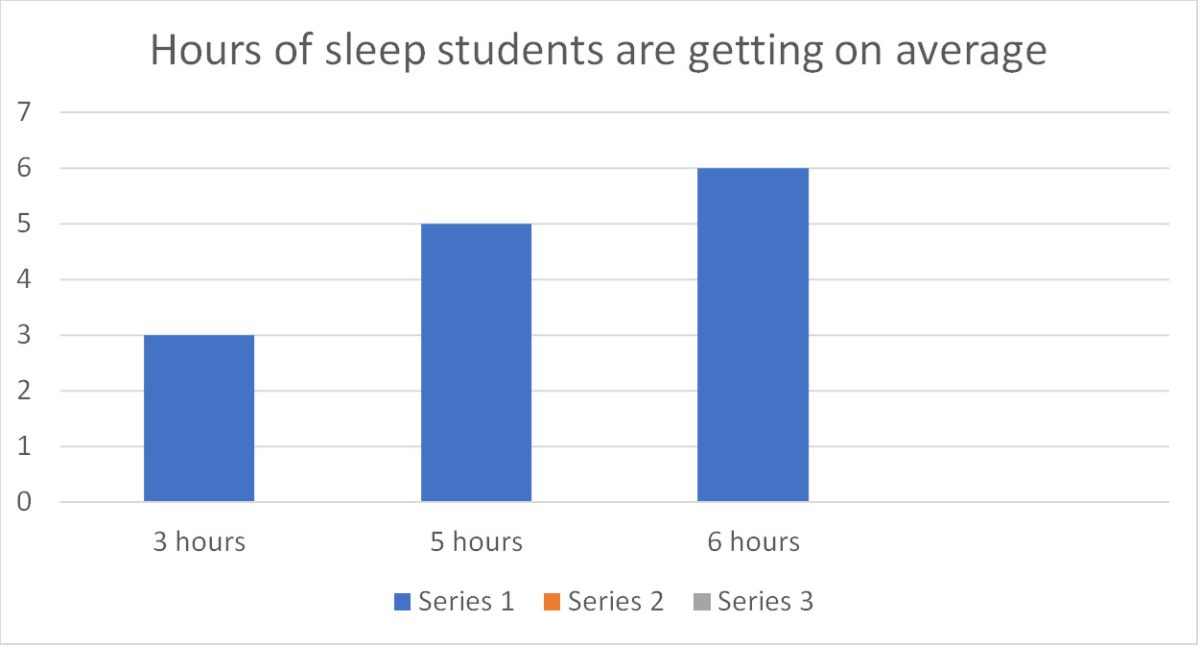
Teens are recommended to get between 8 and 10 hours of sleep, unfortunately that is not the reality for most highschoolers. The average number appearing among 6 different burke students is between 4 to 6, which is still less than the recommended 7 to 9 for full grown adults. Not only does sleep deprivation affect learning, but it also affects students’ mental health.
“Some of my first period classes are my higher classes when you’re tired and trying to do classes it’s pretty hard, then my mental health when I am tired during those classes and when I miss those classes then it puts my grade down and then that’s all I think about and then I am up later at night doing homework and it’s a whole cycle,” Kylie Penix said.
The continuous cycle of having homework and in return going to sleep later is impossible, but also along with sleep deprivation in students it often sways teenagers to stay home.
“When I get bad sleep, I am extra tired and it makes me unmotivated more then I already am, and it just makes it really hard to want to even get out of bed and come to school. In general, especially in this day and age, there’s a lot of screenagers,” Jonae Davis said.
The pattern of sleep deprivation in students has only gone up in past years, electronics most likely have a big impact on this number. As well as the common factors, like school and stress. Teachers and parents alike have been scrambling for a way to help the sleep deprivation crisis.
“At home I make sure my kids LED lights are not set to a blue tone and if we continue to have issues then I do require them to put their electronics in the kitchen or somewhere else. As for at school I think there needs to be a conversation of underlying anything else going on, what else, are you hungry, are you missing something, are you dehydrated, so I think there needs to be a conversation first to approach this,” Julie Baker said.